

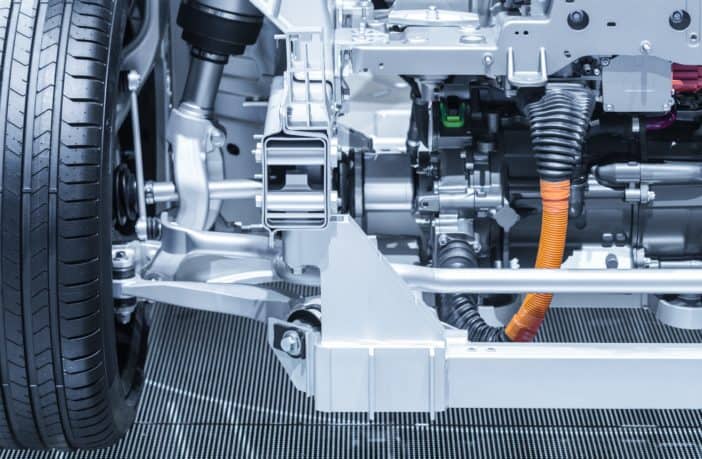
With the gradual integration of electric vehicles into people’s daily transports, there is an inevitable change in engineering education in the same direction. Colleges are no longer just simply teaching in conventional automotive, but are more laying emphasis on electric mobility technologies which will be the future of the business. The electric drive train is the heart of this change and a key element that defines the effectiveness and smooth operation of an electric vehicle. The drive train systems have become common in the laboratories of universities to bridge the gap between the classroom theory and the practical engineering activity.
Electric Drive Trains as a Practical Learning Base
An electric drive train consists of an electric motor, inverter, transmission components, and control components which combine to transform electrical energy into motion. Although such systems are not as mechanically complex as internal combustion powertrains, they add another layer of electrical and control complexity. This combination is particularly appropriate to academic settings, where students are supposed to have an equal knowledge base of both mechanical and electrical engineering aspects.
Inside university labs, students are not just observing systems—they are working directly with them. By adjusting parameters like motor speed, torque demand, or voltage levels, students can immediately see how these changes affect vehicle behavior. This hands-on experience helps transform abstract concepts into practical knowledge that stays with them long after lectures end.
Understanding Efficiency Through Real Experiments
One of the strongest advantages of electric vehicles is their high efficiency, and laboratory experiments play an important role in explaining how this efficiency is achieved. Electric drive trains allow precise measurement of energy flow, making it easier to analyze power losses, heat generation, and recovery mechanisms.
During lab sessions, students explore how different operating conditions—such as varying loads, speeds, and driving cycles—impact overall efficiency. Experiments involving regenerative braking are particularly effective, as they clearly show how energy that would otherwise be wasted can be captured and reused. These experiences help future engineers appreciate how thoughtful design and control strategies can significantly improve driving range and reduce energy consumption.
Performance Evaluation in Academic Environments
Performance in electric vehicles goes beyond speed alone. Factors such as responsiveness, smooth power delivery, and system reliability are equally important. Electric drive trains provide instant torque, giving EVs a distinct advantage over conventional vehicles. In university labs, testing rigs and simulation tools are used to study acceleration behavior, torque characteristics, and thermal performance under different conditions.
This practical exposure allows students to experiment with various configurations and understand that improving performance often requires careful trade-offs. Learning how to balance power, efficiency, and durability prepares students to design vehicles that perform reliably in real-world conditions.
Supporting Research and Innovation
University laboratories often act as early testing spaces for new ideas before they reach commercial development. Research focused on the electric drive train contributes to innovation in areas such as motor efficiency, power electronics, thermal management, and advanced control algorithms.
By closely observing system behavior in controlled lab environments, researchers can identify limitations and test potential improvements. This work not only strengthens academic research but also supports industry progress and broader sustainability goals.
Preparing Students for the EV Industry
Perhaps the most valuable role of electric drive train laboratories is their contribution to student readiness. As the EV sector continues to grow, there is increasing demand for engineers who understand electric propulsion systems at a practical level. Laboratory-based learning helps students develop troubleshooting abilities, system-level thinking, and confidence in working with real equipment.
The graduates who have worked on the drive train systems find it easier to move on to the positions in the automotive, energy, and mobility context.
Conclusion
The efficiency and performance of the electric vehicles are mostly dependent on the usage of the electric drive trains and this is the reason why most attention has been given to them in university laboratories. These systems enhance engineering education and innovation by allowing practical learning, the performance analysis, and purposeful research. With the continuing growth of electric mobility, the university’s laboratories focused on electric drive train technologies will be needed in producing good engineers and in facilitating the achievement of sustainable transportation solutions.