

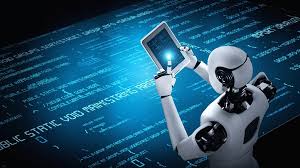
In today’s fast-paced software development landscape, traditional testing methods are struggling to keep up with increasing complexity, shorter release cycles, and the demand for flawless user experiences. AI-driven software testing has emerged as a revolutionary approach, redefining how organizations ensure software quality while reducing time and costs. Unlike conventional testing, AI-enabled tools offer predictive capabilities, intelligent automation, and continuous learning, helping teams address challenges that were previously difficult to tackle.
The Evolution of Software Testing: From Manual to AI
Software testing has come a long way since its inception. Initially, manual testing dominated the scene, requiring testers to execute repetitive test cases and analyze outcomes—a process that was both time-consuming and prone to human error. With the advent of automated testing tools, repetitive tasks became faster and more accurate, but limitations still existed: static scripts, difficulty in handling dynamic applications, and a lack of predictive insights.
The introduction of AI has disrupted this conventional approach. AI-driven testing incorporates machine learning algorithms, natural language processing, and predictive analytics to anticipate potential defects, optimize test coverage, and adapt dynamically to code changes. This evolution represents a paradigm shift, making software testing not just reactive but proactively intelligent.
Key Components of AI-Driven Software Testing
AI-based testing isn’t a single technology—it’s a combination of several sophisticated components working together. Understanding these elements is crucial for businesses aiming to leverage AI effectively.
1. Test Case Generation and Optimization
Traditional test cases often require manual creation, which can be repetitive and error-prone. AI-driven tools, however, analyze historical data, application workflows, and user behavior to automatically generate optimal test cases. These test cases are not only more comprehensive but also evolve over time as the software changes. Benefits include:
-
Reduced redundancy in testing efforts
-
Enhanced coverage of critical paths and edge cases
-
Dynamic prioritization of high-risk areas
2. Predictive Defect Analysis
AI can identify potential software defects before they manifest in production. By leveraging historical bug reports, code complexity metrics, and real-time testing data, predictive algorithms can highlight modules with a higher probability of errors. This predictive capability allows development teams to focus on high-risk areas first, reducing downtime and costly post-release fixes.
3. Intelligent Test Automation
While automation has been around for decades, AI enhances it with cognitive capabilities. Machine learning models can understand application behavior, simulate human-like interactions, and adjust test flows dynamically. Key advantages include:
-
Adaptive test scripts that adjust to UI changes
-
Self-healing tests that reduce maintenance overhead
-
Faster regression testing cycles with minimal human intervention
4. Visual Testing and UI Validation
Modern applications are increasingly visually complex, requiring meticulous UI/UX validation. AI-driven visual testing tools use image recognition and pattern matching to detect inconsistencies in layout, alignment, color schemes, and even font rendering across devices. This ensures that user experiences remain consistent and error-free, a factor critical in customer retention and brand trust.
5. Continuous Testing and DevOps Integration
AI-based testing seamlessly integrates with CI/CD pipelines, enabling continuous testing in DevOps environments. By continuously analyzing build data, test results, and user interactions, AI tools can:
-
Automatically trigger tests based on code changes
-
Suggest optimizations to test coverage
-
Provide real-time feedback to developers and QA teams
This tight integration ensures faster release cycles without compromising software quality, a critical advantage in agile development landscapes.
Benefits of Adopting AI in Software Testing
The shift to AI-powered testing provides tangible benefits that go beyond faster testing. Companies leveraging AI see measurable improvements across various aspects of software development.
-
Enhanced Accuracy: AI algorithms minimize human errors and detect defects that traditional methods often miss.
-
Cost Reduction: Reduced manual efforts and fewer post-release defects translate into significant cost savings.
-
Accelerated Time-to-Market: Intelligent automation and continuous testing shorten release cycles.
-
Improved Test Coverage: AI analyzes patterns and edge cases that manual testing may overlook.
-
Data-Driven Insights: Predictive analytics help teams make informed decisions about quality, risk, and resource allocation.
Challenges and Limitations of AI-Driven Testing
While the benefits are substantial, implementing AI in software testing comes with its own set of challenges. Awareness of these limitations allows organizations to strategize effectively:
-
Data Dependency: AI algorithms require large volumes of high-quality historical data to train effectively. Insufficient data can lead to inaccurate predictions.
-
Complex Setup: Integrating AI tools into existing workflows demands expertise and careful planning.
-
Skill Gap: QA teams need proficiency in AI, machine learning, and data analysis to leverage these tools fully.
-
False Positives: Predictive models may occasionally flag non-critical issues as defects, necessitating human validation.
-
Cost of Implementation: Advanced AI tools can be expensive initially, although ROI is realized over time.
Emerging Trends in AI-Powered Software Testing
The field of AI-driven testing is evolving rapidly. Understanding emerging trends can help organizations stay ahead of the curve:
1. Self-Learning Test Suites
Test suites are becoming self-learning, adapting automatically as the application evolves. These suites not only detect new defects but also refine testing logic to improve efficiency over time.
2. AI-Enhanced Security Testing
Security remains a top concern for modern applications. AI-powered tools can identify vulnerabilities, predict potential attack vectors, and simulate sophisticated cyber threats, helping organizations maintain robust security postures.
3. Natural Language Testing
Some AI tools now allow testers to write test scenarios in plain English, which the system automatically converts into executable test cases. This approach simplifies collaboration between developers, testers, and non-technical stakeholders.
4. Integration of AI with Low-Code Platforms
Low-code development is surging in popularity. AI testing tools are increasingly being integrated into these platforms to automatically validate workflows and UI components, ensuring low-code applications maintain enterprise-grade quality.
Best Practices for Implementing AI in Software Testing
Organizations aiming to adopt AI-driven testing should follow these best practices to maximize ROI:
-
Start with pilot projects to measure effectiveness before scaling.
-
Ensure access to high-quality, structured testing and production data.
-
Integrate AI tools into existing DevOps pipelines for continuous feedback.
-
Train QA teams on AI concepts and data interpretation.
-
Monitor AI predictions continuously and refine algorithms to reduce false positives.
-
Maintain a balance between automated AI testing and human oversight.
Conclusion
AI-driven software testing is no longer a futuristic concept—it is a present-day necessity for organizations striving to deliver high-quality, reliable software at speed. By leveraging predictive analytics, intelligent automation, and adaptive test strategies, businesses can reduce errors, accelerate releases, and improve customer satisfaction. While challenges exist, strategic implementation and ongoing refinement ensure that AI becomes a powerful ally in the quest for software excellence.
The adoption of AI in testing is not just about automation—it’s about intelligent decision-making, proactive quality assurance, and future-proofing software development processes. Companies that embrace this transformative technology will gain a competitive edge in an increasingly digital world.
FAQ: AI-Driven Software Testing
1. How does AI improve test coverage compared to traditional methods?
AI can analyze historical data, usage patterns, and code complexity to generate test cases that cover edge scenarios often missed by manual or scripted testing, resulting in comprehensive coverage.
2. Can AI completely replace human testers?
No, human oversight is still necessary for interpreting complex scenarios, validating predictions, and handling subjective UX assessments. AI enhances testing efficiency but doesn’t eliminate the need for skilled QA professionals.
3. What types of applications benefit most from AI-driven testing?
Complex, dynamic applications with frequent updates, such as web apps, mobile apps, and enterprise software, gain the most benefit due to the AI’s ability to handle continuous change and detect subtle defects.
4. How do AI tools integrate with CI/CD pipelines?
AI tools can automatically trigger test suites based on code commits, analyze results in real-time, and provide actionable feedback to developers, ensuring quality is maintained throughout continuous deployment cycles.
5. What are the biggest risks of implementing AI in testing?
Primary risks include data dependency, false positives, initial implementation costs, and the need for specialized skills. Careful planning and ongoing monitoring can mitigate these risks.
6. Is predictive defect analysis reliable?
While highly effective, predictive analysis is only as accurate as the data it’s trained on. Combining AI predictions with expert validation ensures reliability.
7. How does AI testing impact release speed?
By automating repetitive tasks, dynamically generating tests, and prioritizing high-risk areas, AI significantly reduces regression and validation time, enabling faster and more confident releases.